The Silver Britannia: CGT-Free for UK Residents, Now as Low as 2.40 USD Over Spot

Eleven years ago, I wrote an article identifying three misunderstandings that were — and in many parts of the industry remain — endemic to bullion storage. Reading it again today, I am struck less by what has changed and more by what has not.
The Three Ways People Hold Gold and Silver
The financial industry markets dozens of precious metals products under many different names. Almost all reduce to one of three legal structures — and the difference between them is invisible in normal times but decisive in a crisis.
Unallocated — You are an unsecured creditor. The bank or dealer owes you ounces but holds no specific metal for you, typically backing only a fraction of what it owes. Most retail "gold accounts" are unallocated by default: the lowest-cost option, but legally a claim, not ownership. If the counterparty fails, you rank alongside its other creditors. This structure is also why unallocated accounts usually charge no storage fee. Because the issuer is not obliged to buy and hold real metal — the position is an IOU with no firm backing requirement — it can instead put your money to work earning interest, perhaps 5% a year, which is far more profitable than holding gold on your behalf. A 0.25% storage fee for genuine allocated metal cannot compete with that, so the IOU is offered "free." The absence of a storage fee is not generosity; it is a signal that no specific metal is being held for you.
Allocated (including ETFs and trusts) — You are a beneficial owner. The metal exists and is allocated to a trust or custodian, but you hold units or a beneficial interest rather than legal title to specific bars. Delivery is usually restricted, subject to committee approval or large minimums, and the structure introduces a chain of intermediaries — sponsor, trustee, custodian, sub-custodians — each a potential point of failure. There is also a cost most holders never notice. An ETF such as GLD gives you metal exposure through shares in the fund and charges an annual fee of as much as 40 basis points — some gold ETFs charge as little as 19 — but that fee is not billed as a storage charge or deducted as a reduction in your share count. Instead, it is taken by gradually reducing the metal backing each share, so the traded share value drifts lower over time relative to the metal. Many investors believe ETFs carry no holding fee; in reality they pay a fee of up to roughly 0.40% a year, automatically and invisibly.
Physical legal title — You are the direct legal owner of specific, identified bars or coins. There is no trust and no creditor relationship. The vault is your storage agent (bailee), not a counterparty. In a counterparty failure, the bars remain your property; they are not part of any estate. This is the only structure where counterparty risk is absent by design.
| When stress hits | Unallocated | Allocated / ETF | Physical Title |
| Legal status | Unsecured creditor | Beneficial owner | Direct legal title |
| Physical backing | Fractional | Pooled custody | Your specific bars |
| If counterparty fails | Rank with creditors | Trust liquidation | Bars stay yours |
| Delivery | Bank discretion | Restricted | On demand |
| Annual cost | Near-zero* | ~0.25–0.50% | ~0.25–0.6% |
*Unallocated appears nearly free because the bank earns from using your funds — the cost is the counterparty risk you carry. Physical title cost includes audits, insurance, and vaulting. Sources: GLD/SLV/PHYS prospectuses, LBMA, Silver Bullion data.
Most investors believe they own precious metals. What many hold is a claim on a counterparty — and for unallocated positions, that counterparty often holds only a fraction of the metal it owes. There is a further trap: many arrangements marketed as "allocated" do not segregate specific metal to specific clients, assigning only a quantity of ounces that is rotated through inventory as convenient. The evidence appears regularly when clients transfer metal to us — coins bought in one year arrive bearing a later mint date, because the originals were cycled out and replaced. The label was "allocated"; the practice was closer to unallocated. There is a simple test: if your vault statement does not show a specific list of the bars or coins you own, you are most likely not a legal-title owner. Legal title requires the metal to be uniquely identified as yours — if it is not, you are not an owner by definition.
At Silver Bullion, every parcel stored at The Reserve is a uniquely identified collection of physical metal. Legal title transfers to you through an invoice under Singapore law and is removed from our balance sheet entirely. We are a storage agent for your property, not a counterparty to an obligation. The analogy is to real estate ownership, not to a bank deposit.
|
In normal times, the difference between these three structures is invisible. In a crisis, it is the difference between owning your metal and queuing as a creditor. |
This is a brief summary. For a fuller treatment — including the counterparty chain behind each structure, jurisdictional risk, and how the three compare across nine dimensions — see our detailed guide: Unallocated, Allocated & Physical: What You Actually Own.
Security Through Transparency, Not Obscurity
The industry argument — "we cannot show you your storage facility or how your metal is stored for security reasons" — exists primarily to hide the fact that storage is often outsourced, absent, or held in conditions that would not inspire confidence. The locations of commercial vaults are not secrets. Showing a client where their metal sits does not compromise security; it confirms that the metal exists.
We have always taken the transparent approach, on several fronts at once: our vault audits are conducted by independent, accredited auditors and published in full on our website; clients can request a personal audit of their own holdings at short notice; and the facility itself is far more accessible to clients and due-diligence visits than is typical in the industry. Now that we operate one of the world's highest-capacity precious metals vaults, with a level of transparency that is unheard of in the sector, we will keep pushing the wider industry toward the openness that genuine systemic wealth protection requires.
Insurance: What "All-Risk" Actually Means
"All-risk" insurance does not mean all risk is covered. It means all risk is covered except what the policy excludes — and the exclusions are where the real differences lie. A policy can carry impressive headline coverage while quietly excluding the very scenarios that matter most.
The clearest marker of genuinely robust cover is inclusion of mysterious disappearance — loss that cannot be attributed to a specific identifiable event. It is the gold standard of bullion insurance precisely because it closes the gap that weaker policies leave open. Our cover includes it, goes beyond industry norms, and is independently verified, with the certificate published on our website. The full details, including what is covered and why, are set out here: Insurance Beyond Industry Norms.
What 11 Years of Growth Looks Like
When I wrote the original article in 2015, Silver Bullion had been operating for around six years and The Safe House — our vaulting operation — had only just opened, with a fraction of our current client base. Since then, The Safe House has moved into The Reserve, our own dedicated vault facility, which we fully own and run ourselves rather than renting space in a third party's building. (The two are separate entities, both owned by us: The Safe House handles the vaulting; The Reserve is the facility.) We have expanded our independent physical audit programme, introduced our DUX authenticity testing guarantee, and grown our storage client base significantly across more than 30 countries. The growth has been substantial: in 2015 we recorded around SGD 67 million in revenue; in 2025 we exceeded SGD 1 billion. We take that as validation that the approach — genuine ownership, real transparency, robust insurance — is what clients want from a custodian.
None of that growth changed the principles. And those principles are no longer just ours to apply internally: I am now representing them as part of the Gold Market Development Working Group, an industry initiative convened with the central bank of Singapore to strengthen Singapore's role as a precious metals hub. Our aim within that group is to move the industry toward the standards of ownership, transparency, and protection that systemic wealth preservation demands — the same standards we built into Silver Bullion from day one.
|
SPECIAL FEATURE
The Silver Britannia — A Coin With a Built-In Tax Advantage |
The Silver Britannia, minted by The Royal Mint, is one of the most widely recognised silver bullion coins in the world. It also carries a feature that sets it apart from almost every other silver coin: for UK residents, it is exempt from UK Capital Gains Tax. This is not a general rule about coins — it is the result of specific UK legislation. Because Britannias are UK legal tender, HMRC treats gains on them as exempt from CGT under UK law. The exemption applies to UK-resident taxpayers and is particular to British legal-tender coins.
This matters even if you are not a UK resident. The UK is one of the largest precious metals markets in the world, and the CGT exemption gives Britannias a durable source of demand from UK buyers — demand that does not exist for most other coins. A coin that a large, wealthy investor base has a specific tax reason to prefer is a coin that tends to hold its premium and remain liquid. For any international investor, owning a globally traded coin that a major market is structurally motivated to buy is an advantage in its own right, independent of your own tax residency. (For more on the coin itself, see our article on the rich history of the UK Silver Britannia.)
Under HMRC rules, all Royal Mint coins carrying a face value are classified as UK legal tender, and gains on legal tender are not subject to CGT — regardless of the amount. There is no annual limit and no ceiling above which the exemption disappears.
|
FOR UK RESIDENTS — A DOUBLE TAX ADVANTAGE UK investors who buy Silver Britannias in Singapore benefit from a combination that is difficult to replicate anywhere else:
The result: a UK resident buying Silver Britannias through Silver Bullion pays no tax on purchase and no tax on sale, in either jurisdiction. |
What the UK Exemption Is Worth
Silver briefly touched $120 per ounce earlier this year before pulling back. The comparison below shows what that same price move would mean for a UK resident holding a monster box of 500 coins — a normal silver coin versus a Britannia — assuming a purchase near current levels.
| Monster box, 500 × 1oz | Normal Coin | Britannia |
| Total cost to buy | $36,000 | $35,200 |
| Value at $120/oz | $60,000 | $60,000 |
| UK Capital Gains Tax (24%) | −$5,760 | $0 |
| Net profit after UK tax | $18,240 | $24,800 |
Illustrative, UK taxation only. Assumes $2.40 over spot for Britannias versus a $4.00 typical premium for normal coins. Singapore has no capital gains tax. CGT rates and rules are subject to change; UK residents should verify their personal tax position with a qualified adviser.
For a UK resident, the CGT exemption alone is worth $5,760 on a single monster box, on a price move that already occurred once this year — and it scales with no ceiling on larger positions. Combined with our promotional premium, which saves a further $800 on entry, the Britannia leaves a UK buyer $6,560 better off than a standard coin in this scenario. For everyone else, the same exemption is the reason Britannias enjoy steady UK demand and tend to hold their premium well.
|
LIMITED PROMOTIONAL RATE 1oz Silver Britannias as low as USD 2.40 over spotVersus a typical $4.00 premium — you start $800 ahead on a monster box before silver moves at all. |
 |
Silver Bullion stores your coins in Singapore under your legal title, with independent audits and full insurance. Your Britannias sit in the same vault, under the same ownership model, as every other parcel we hold. Secure yours today.
|
AUDIT TRANSPARENCY
A Note on Our Vault Audit Reports |
We want to be transparent with you about a recent issue affecting two of the audit reports published at silverbullion.com.sg/Report/TshVaultAudit.
The 31 December 2025 bullion audit report from Foo Kon Tan LLP was initially uploaded as a corrupted file. Although the document showed as a 900+ page report, the later pages were not viewable. This has since been corrected, and the complete (uncorrupted) report is now available.
Bureau Veritas Q1 2026 physical audit report: Bureau Veritas conducted the Q1 2026 physical vault audit on 13 April 2026. When the certificate was first published, it contained an error. We requested a correction from Bureau Veritas. During that correction process, an additional certificate reference was inadvertently generated and briefly issued as a standalone document, creating confusion about which certificate was valid. We escalated the matter to Bureau Veritas management.
Bureau Veritas has since issued a Formal Correction Notice, dated 15 June 2026 and available for download [here], which clarifies the sequence of events. We want to highlight the key points from that notice:
- The issue was one of certificate document control and numbering, not a discrepancy in the inspection findings themselves. Three certificate references became associated with the same 13 April 2026 inspection assignment as a result of the correction process: the original certificate (SGMSG-25-00366), an intermediate certificate issued in error (SGMSG-25-00347), and the final corrected certificate (SGMSG-26-00347/Revised No.03).
- Bureau Veritas confirms that all three certificate references relate to the same inspection assignment and are linked through the corresponding inspection records, job files, document history, and quality management records.
- Certificate No. SGMSG-26-00347/Revised No.03 is the only valid certificate for this inspection and supersedes and replaces both earlier references in full.
- Bureau Veritas has raised a formal complaint and root cause investigation through its i-Evaluate customer complaint management system, and has implemented a number of corrective measures, including enhanced document verification procedures prior to certificate issuance, mandatory secondary review and approval for all amended or revised certificates, strengthened revision control requirements, refresher training for relevant personnel, and supervisor or manager review of all future revised certificates prior to release.
We are publishing the Bureau Veritas Formal Correction Notice in full alongside the corrected certificate, in the interest of complete transparency. Physical audits exist to give our clients certainty about their holdings. When errors occur, whether on our side or a third party's, we will always identify them, correct them, and document the process publicly.
|
AT THE RESERVE
Safe Deposit Boxes |
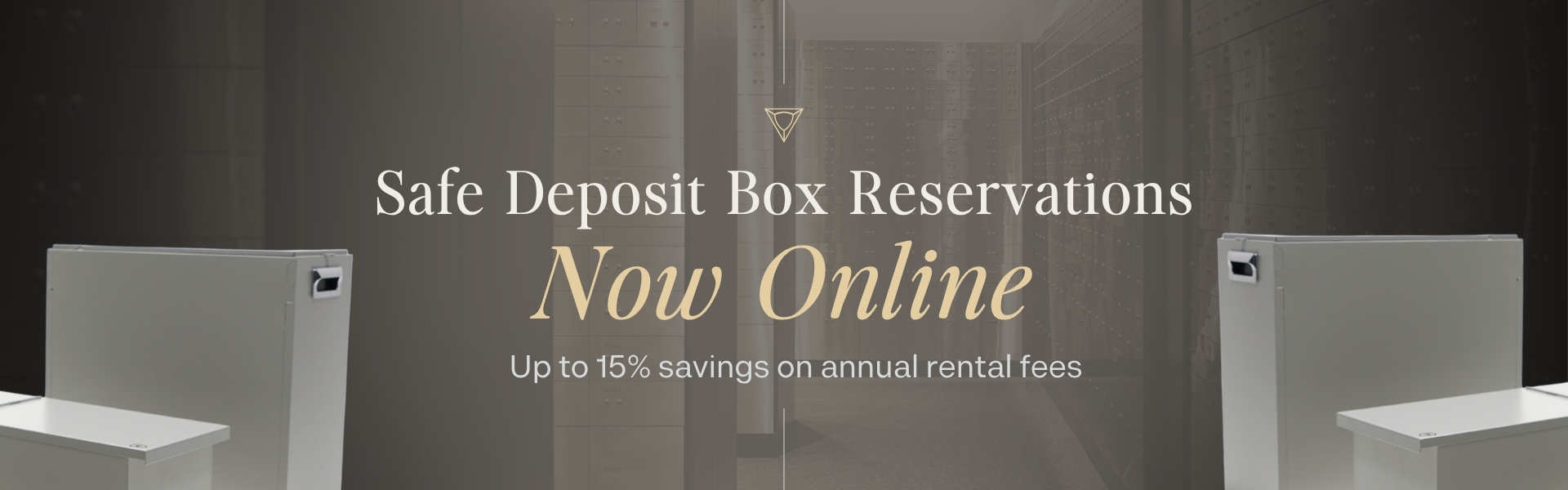 |
Alongside our allocated bullion storage, The Reserve houses 12,500 safe deposit boxes — built to the same standard of security and access discipline as the rest of the facility. They are well suited to documents, valuables, and bullion you wish to hold and access personally.
|
||
|
||
|
To enquire about availability or arrange a viewing, please contact our team.
Regards,
Gregor Gregersen
Founder & CEO · Silver Bullion Pte Ltd · Singapore